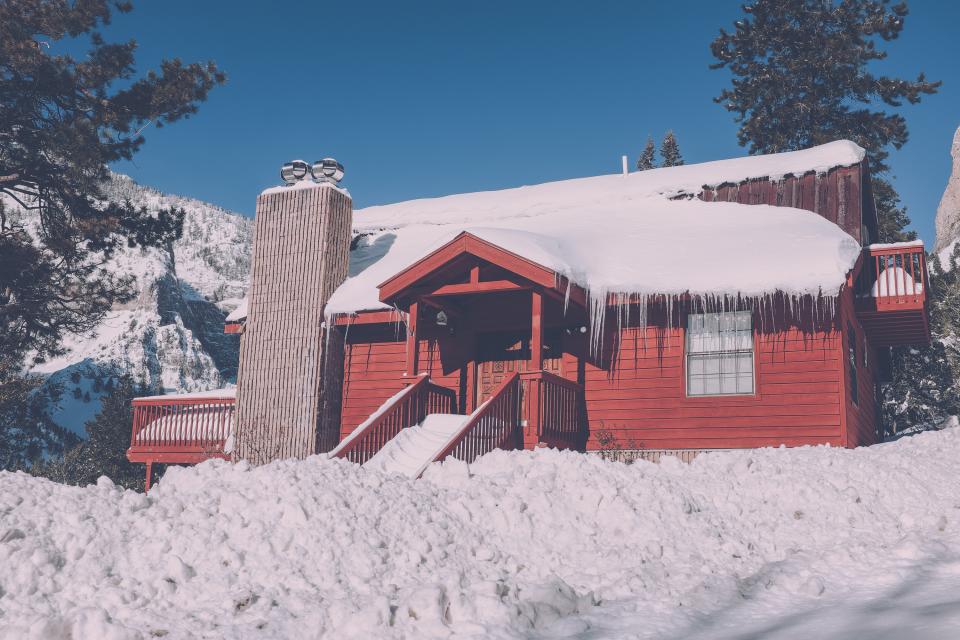
Northern Illinois winters are hard on roofs. Snow sits for weeks, temperatures swing above and below freezing, and a sunny afternoon followed by a cold night can repeat the same cycle over and over. That freeze-thaw pattern is exactly what creates ice dams, one of the most common causes of winter leaks we see in homes from Rockford to Barrington.
An ice dam forms when heat escaping from the living space warms the upper part of the roof. Snow on that warm section melts, the water runs down the slope, and when it reaches the colder eaves — the overhang that sits outside the heated part of the house — it freezes again. Over several days that frozen ridge grows, and meltwater backs up behind it. Shingles are designed to shed water running downhill, not to hold back standing water, so that backed-up water can work its way under the shingles and into the roof deck, walls and ceilings.
The warning signs are usually visible. Thick ridges of ice along the edge of the roof, large icicles hanging from the gutters, water stains or peeling paint on ceilings near exterior walls, and damp insulation in the attic are all common. Uneven snow melt is another clue: if the snow disappears in patches over the living space while the eaves stay loaded, heat is escaping where it shouldn't.
The root cause is almost always in the attic, not on the roof surface. Two things work together: insulation, which keeps the heat inside the house, and ventilation, which keeps the attic air close to outdoor temperature. Gaps around light fixtures, bath fans, attic hatches and plumbing stacks let warm air leak upward. Blocked soffit vents, missing ridge vents or insulation stuffed against the eaves stop the attic from breathing. When we look at an ice dam problem, we check both sides of that equation.
Gutters play a supporting role. Gutters clogged with leaves from fall can hold water that freezes solid, adding weight and giving ice a place to build. Heavy ice can pull gutters away from the fascia or bend them out of shape. Cleaning gutters before winter and making sure downspouts drain away from the foundation helps, but gutters alone don't cause or cure ice dams — the heat loss above them does.
During a new roof or a major repair, ice-and-water protective membrane installed along the eaves, valleys and other vulnerable areas adds an important layer of defense. Building codes in cold climates like ours commonly require it at the eaves, though local requirements vary. It doesn't stop ice from forming, but it helps keep backed-up water from reaching the deck if a dam does form.
If you already have an ice dam, be careful. Chipping at ice with a hammer or an axe can easily damage shingles and gutters, and climbing onto an icy roof is dangerous. A roof rake used from the ground can remove snow from the lower few feet of the roof and reduce the problem. If water is actively coming into the house, catch it, move valuables, and call a professional rather than going up yourself.
The best time to deal with ice dams is before the snow falls. A fall inspection of your roof, gutters, attic insulation and ventilation can catch most of the problems that lead to winter leaks. E&C Construction LLC is based in Garden Prairie and serves homeowners across Northern Illinois, with free estimates and 24/7 availability for emergency leaks. Call (224) 800-5132 — se habla español.